
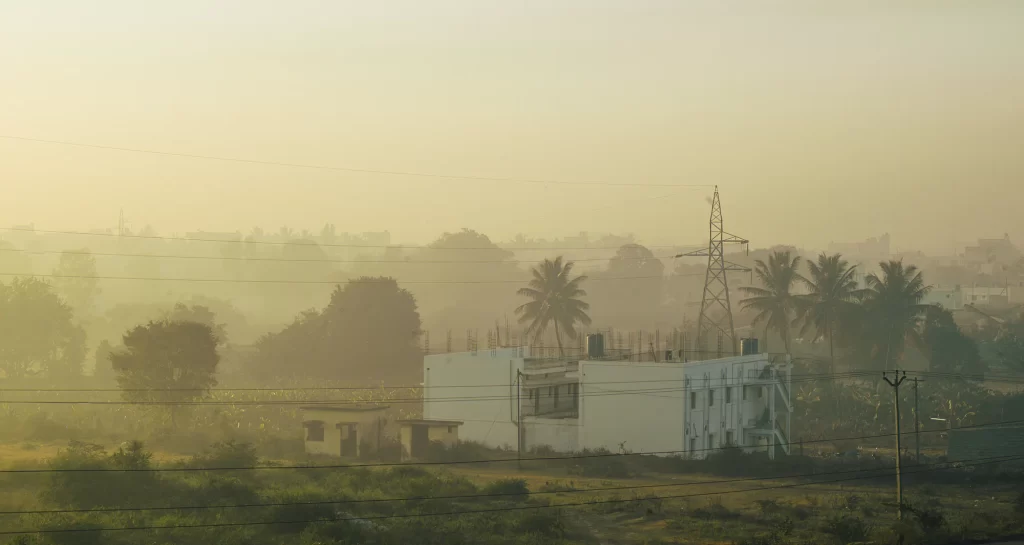
Hosur is facing severe traffic congestion due to ongoing infrastructure projects, including a problematic flyover at Bagalur Road Junction (GRT Circle) and several incomplete roadworks.
Other major issues include water scarcity, sewage contamination, and the growing need for improved public transport and better housing to support rapid industrial growth.
In nearby agricultural areas, farmers are also struggling with crop damage caused by migrating elephants.
Traffic and Infrastructure
Flyover Issues
The GRT Circle flyover developed cracks, leading to restrictions on heavy vehicles and causing significant traffic congestion on NH 44.
Although repair work is currently underway, delays have further worsened traffic, especially on the Outer Ring Road.
Incomplete Infrastructure Projects
A new flyover near the SIPCOT Industrial Area, launched in 2023, remains unfinished. This has added to Hosur’s increasing traffic problems.
Road Maintenance Concerns
Ongoing road maintenance on Bagalur Road has resulted in traffic bottlenecks and parking-related issues.
Public Services and Utilities
Water Scarcity and Contamination
The city is experiencing acute water scarcity, along with reports of sewage contamination in water sources, raising serious public health concerns.
Sewage and Drainage Issues
Blocked drains and sewer lines frequently cause waterlogging and flooding, particularly during the monsoon season, leading to public complaints.
Public Transportation and Housing
Need for Improved Public Transport
Residents have demanded:
- Better approach roads connecting to national highways
- A direct train service to Chennai
- An exclusive airport for Hosur and surrounding regions
Housing Demand
With rapid population growth driven by industrial expansion, there is a strong demand for improved and affordable housing options.
Agriculture and Wildlife Issues
Elephant Migration
Migrating elephants from the Jawalagiri and Denkanikottai forest regions regularly enter agricultural fields, damaging crops.
Crop Damage and Farmer Concerns
Farmers have requested:
- Stronger fencing systems
- Increased deployment of forest department personnel during migration seasons
Preventive Measures
The forest department has implemented measures such as wire fencing and grass plantation, which have shown partial success in reducing crop damage.
Causes of Toxic Froth Formation
The presence of toxic foam in water bodies is mainly due to:
- Untreated industrial effluents
- Domestic sewage released into river systems from industrial areas in and around Bengaluru, Karnataka
Since Bengaluru is upstream of Krishnagiri district in Tamil Nadu, the problem intensifies during the rainy season, when heavy rainfall washes accumulated waste downstream into dams, causing excessive foam at dam outflow points.
Major Impacts and Problems
Agricultural Damage
Farmers in Krishnagiri and downstream districts such as Dharmapuri, Vellore, and Cuddalore report:
- Severe crop damage
- Heavy financial losses
Polluted water and chemicals in the foam reportedly burn crops such as ragi and carrot, rendering the water unsuitable for irrigation.
Health Concerns
Residents living near affected rivers have reported frequent illnesses, along with fears about:
- Long-term health effects
- Contamination of the local groundwater table
Environmental Crisis
The pollution represents an ongoing environmental emergency, threatening:
- River ecosystems
- The livelihoods of thousands dependent on these water sources
Ongoing Actions
The issue has become an interstate concern, with the Tamil Nadu government urging Karnataka to take strict action against polluting industries.
The National Green Tribunal (NGT) has taken suo motu notice of the contamination and has constituted a committee to:
Recommend a permanent solution
Study the issue in detail